
Point of Care Testing Explained
14 June 2026 · By Diagnostics Mauritius · Updated 9 July 2026
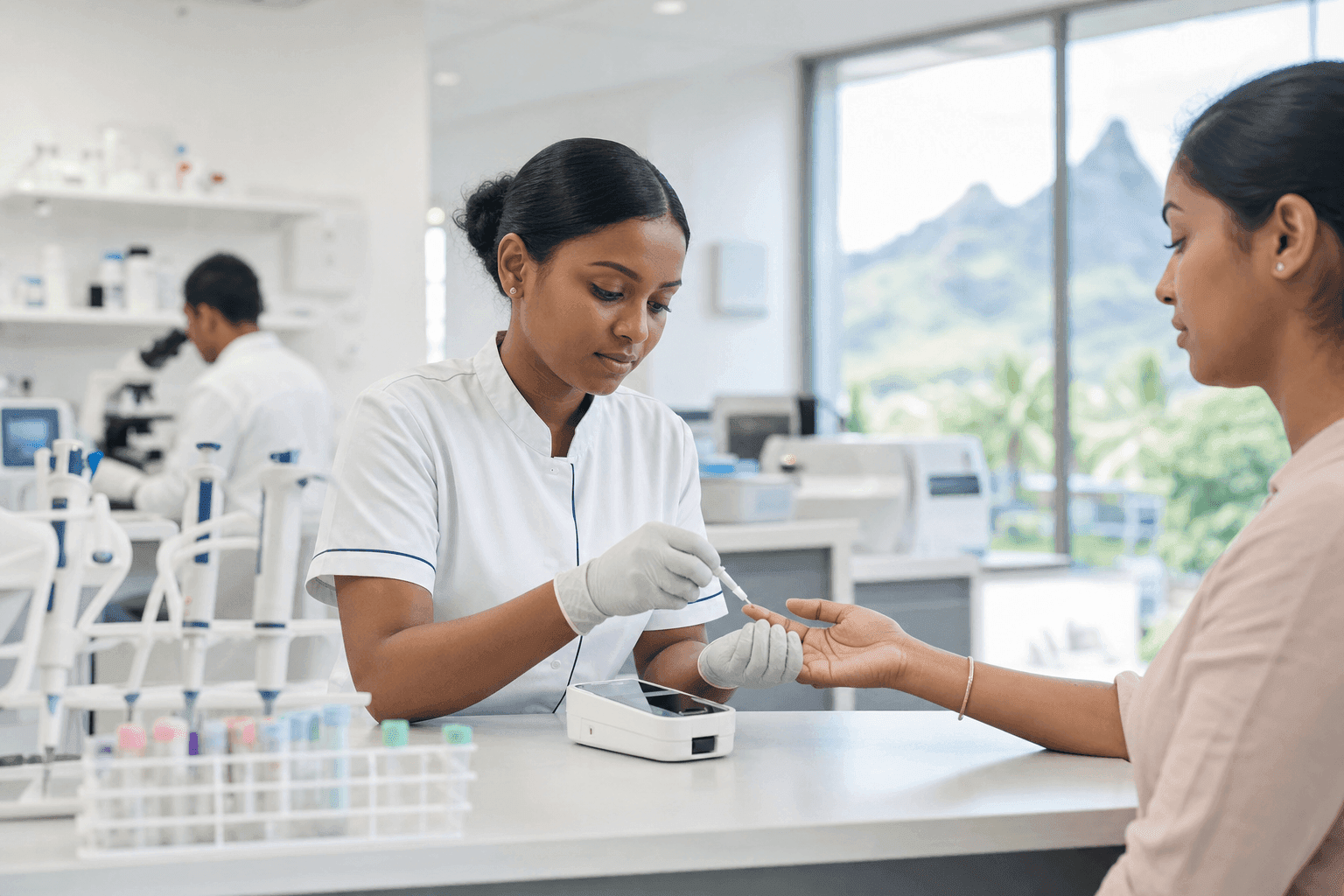
Not every test happens in a central laboratory. A growing number are done right beside the patient, in a clinic room, an ambulance, a pharmacy, or at home. This is point of care testing, often shortened to POCT, and it is changing how quickly people get answers about their health. Understanding what it can do, and where its limits lie, helps you make sense of results delivered in minutes rather than days.
What point of care testing means
Point of care testing is any diagnostic test performed close to the patient, with results available almost immediately. Instead of sending a sample away and waiting, a small device analyses it on the spot. The goal is speed, so that a decision can be made during the same visit rather than at a follow up appointment. This immediacy is the whole point, and it can be genuinely valuable when time matters.
Everyday examples
You have probably encountered point of care testing without naming it. Common examples include several familiar devices and kits.
- Blood glucose meters that people with diabetes use to check their sugar at home in seconds.
- Rapid antigen tests for infections such as influenza or COVID-19, giving a result in minutes.
- Pregnancy tests, which detect a hormone in urine and are a simple form of point of care testing.
- Finger prick devices that measure cholesterol or HbA1c during a health check.
- Coagulation meters that help patients on blood thinning medication monitor their clotting at home.
Why speed helps
The main benefit is obvious, you get an answer fast. In an emergency, a rapid result can guide immediate treatment. In a remote clinic far from a hospital laboratory, point of care testing may be the only practical way to test at all. For people managing long term conditions, home testing puts useful information in their own hands, encouraging them to take an active part in their care and adjust their habits day to day.
The trade offs
Speed and convenience come with compromises. Point of care devices are smaller and simpler than laboratory analyzers, and they are often slightly less precise. They usually test one thing at a time rather than running a broad panel. Results can also be affected by how the test is performed, so a rushed or incorrect technique can mislead. For these reasons, an unexpected or important point of care result is often confirmed by a full laboratory test before major decisions are made.
Quality still matters
Because these tests are done outside the controlled laboratory environment, quality control is essential. Devices must be maintained, control samples run regularly, and users properly trained. A glucose meter that is not calibrated, or a rapid test used past its expiry date, can give a false result. Reputable clinics treat point of care testing with the same seriousness as laboratory testing, following clear procedures and keeping records.
How it works alongside the laboratory
Point of care testing does not replace the central laboratory, it complements it. The laboratory remains the place for complex, high volume, and highly precise testing, while point of care handles urgent and simple questions where speed is worth more than the last degree of precision. The two work as a team, and a good clinician knows which tool suits which situation.
Point of care testing in Mauritius
For an island with communities spread across many towns and villages, point of care testing extends the reach of good diagnostics. It supports rapid screening during outbreaks, helps pharmacies and clinics offer quick checks, and allows people with diabetes, a common condition here, to monitor themselves between medical visits. Used wisely, it brings faster answers closer to where people live.
Using it well
If you use a point of care test, a few habits protect the accuracy of your result.
- Follow the instructions exactly, including timing and sample size.
- Check that kits are within their expiry date and stored correctly.
- Treat an unexpected result as a prompt to seek a confirming test, not a final answer.
- Share home readings with your doctor so they form part of your overall picture.
The bottom line
Point of care testing delivers fast, convenient results that can guide decisions on the spot. It is a powerful complement to the central laboratory rather than a substitute for it. When used with proper technique and sensible caution, it puts timely information exactly where it is needed, at the side of the patient.
Accurate diagnostics are the foundation of the right treatment. Explore the wider Medtech diagnostics and medical technology network.
This article is for general education only. It cannot interpret your personal results and does not replace advice from the clinician who ordered your tests.